
Published Voices
-
Are Evaluation Frameworks Keeping up with Innovative Development Financing Instruments?
As social impact bonds and development impact bonds welcome an opportunity for private sector investment to provide capital for social change, community interest must be prioritized in these multi sectoral contracts. Evaluation frameworks must ensure that targets and desired outcomes align profoundly with communities that impact bonds are set up to serve. Innovation is needed to combat the inefficiencies and ineffectiveness currently faced in traditional development aid, and with community-driven evaluation frameworks, impact bonds have the potential to transform the mechanism of today’s traditional aid programs.
-
White Liberal Educators as a Personified Double-Consciousness
Through personal academic experience, I argue that the white educator visually embodies my own ‘personified’ Duboisian double consciousness. This develops through agents of socialization and the social behavioural inclinations held within the Freudian superego that teach values such as discipline, kindness, etc. I also argue this white embodiment of values and values themselves are an extension of Weber’s description of capitalist values. While educators have taught with care, this liberal ideology does not support racial liberation. The pedagogical practices of increased representation of racialized students and cultural integration may ameliorate the issue of racial disassociation with the values taught in Canadian schools.
-
Creativity and the Solidarity Economy
Creativity, and in particular creative economics, is often considered as somehow distinct from the realm of economics and politics. This paper will argue for the essential inclusion of creativity in development and policy making, recognizing creative acts as a practice which builds social capital and reciprocity economies.
-
Decolonizing the Single Mentality Approach to Solving Underdevelopment and Rural Poverty in the Global South: A Book Review
What is the best way to address global poverty and underdevelopment? How much confidence should we put into foreign aid, free-market or democracy for the poor? This book review is about decolonizing single-approach mentality to addressing global poverty and underdevelopment in modern times.
-
Eyes on Chile: On the Brink of Departure from Neoliberal Policies?
Following the economic restructuring of the 1970’s, Chilean activists and academics suggest privatization as a catalyst for inequality in the country today. This piece provides a brief overview of the two-tiered social infrastructure in Chile, and looks to the incoming constitutional restructuring as a potential opportunity to close the inequality gap.
-
Indigenous Inclusion in Climate Change Policy
This paper aims to explore Indigenous adaptation strategies and how they can be integrated into policy. The key takeaway is that the inclusion of Indigenous communities and their ecological knowledge can support existing scientific research as well as policy formulation.
-
Visual Culture and the Climate Crisis
This paper understands the idea of creative culture not as simply ‘the arts’, but includes practices like marketing and architecture alongside the traditional arts, and includes those practices not typically contained within gallery settings. Creative culture should be seen as one of the most effective tools for communicating the climate crisis for its ability to employ imagination to make tangible the invisible violences of environmental degradation. Importantly, the use of this imagination is creating an environment in which viewers are asked to rethink our relationship to each other and our environments, and the ways in which we use them.
-
Decolonization in Development: Who Lives, Who Dies, and Who Determines Ethics in IR?
Is the field of international relations (IR) able to overcome the lack of universality and the colonial standards of ethics within the discipline? This paper aims to explore these issues of ethics in IR from both a historical and social justice perspective when it comes to the Global African Community (diaspora and continental).
-
Coral Reefs: The Impact of Resotation Infrastructure on Coastal Communities
Coastal communities are highly impacted by climate change, infrastructure and social policies implemented to protect coral reefs. This is explored through academic readings and a case study in Guam.
-
Flirting for Foreign Funds: Rethinking Global Sex Work in the Asian Context
By analyzing llicit Flirtations: Labor, Migration, and Sex-Trafficking in Tokyo by Rhacel Salazar Parreñas and Dealing in Desire: Asian Ascendancy, Western Decline, and the Hidden Currencies of Global Sex Work by Kimberly Kay Hoang, this paper urges readers to challenge their current understanding of global sex work.
Blog Posts
-
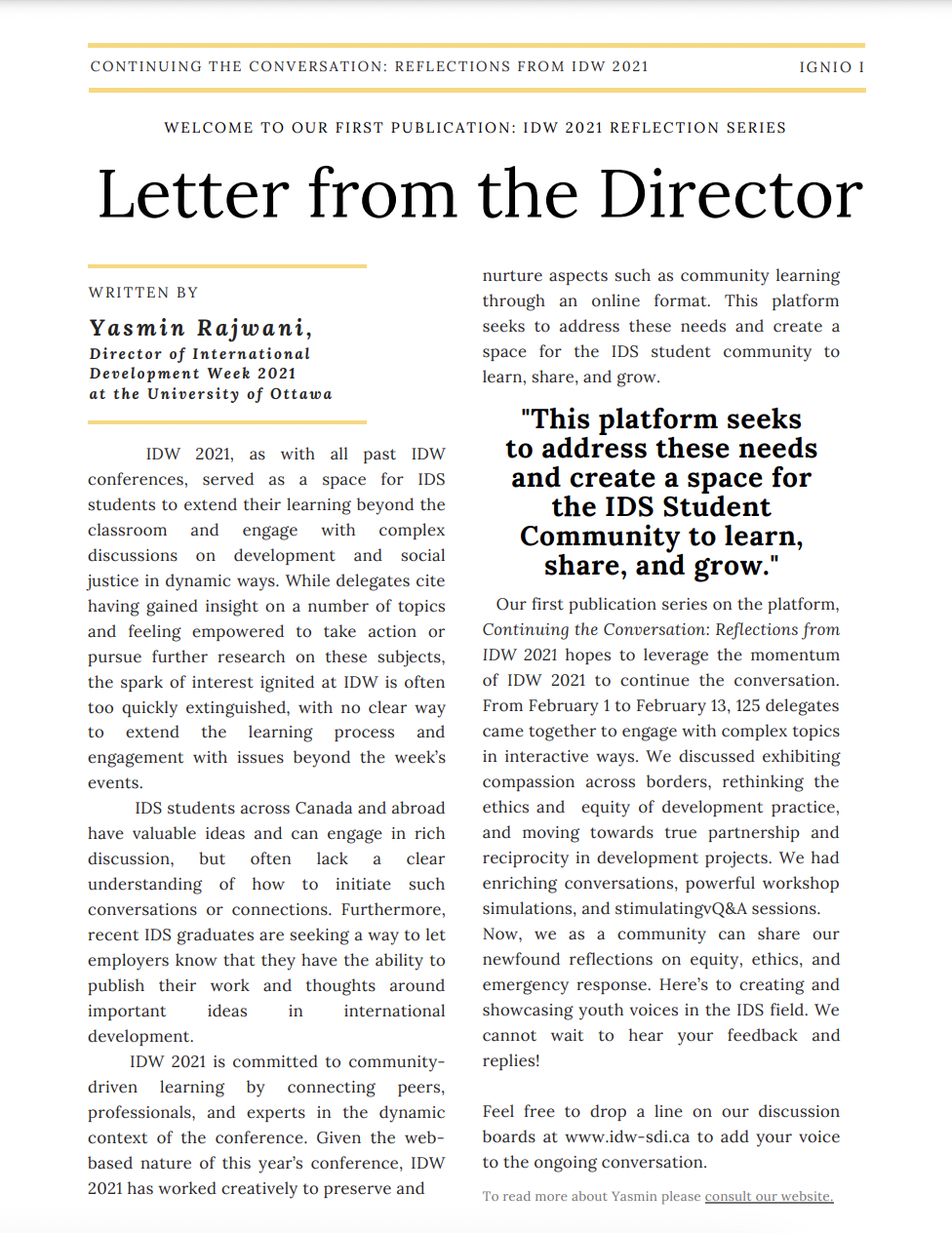
Letter from the Director
This address from the Director of International Development Week (IDW) at the University of Ottawa introduces the reflection series by providing insight on the relationship between Ignio and IDW 2021: Ethics, Equity, and Emergency Response.
-
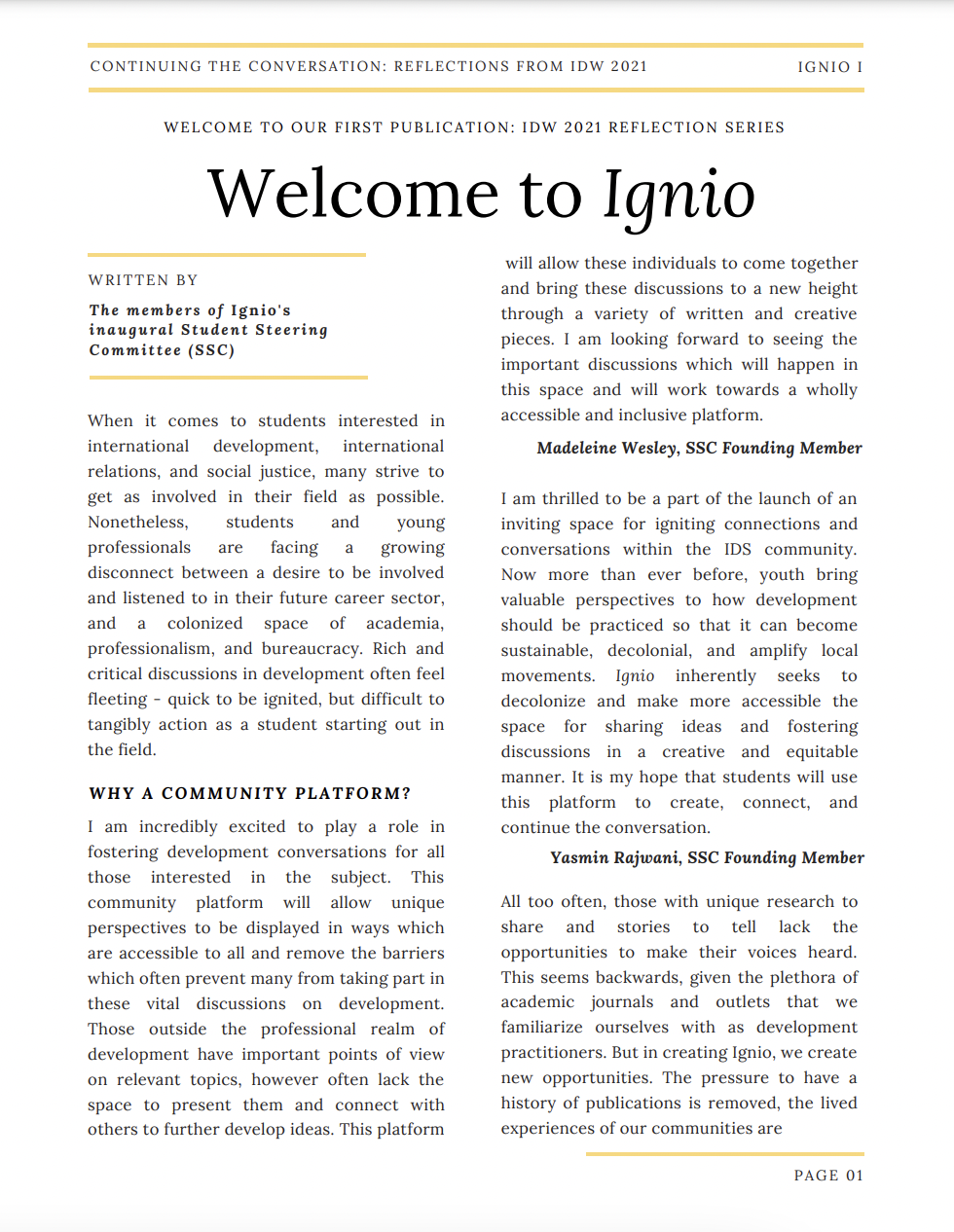
Why a Community Platform?
When it comes to students interested in international development, international relations, and social justice, many strive to get as involved in their field as possible. Nonetheless, students and young professionals are facing a growing disconnect between a desire to be involved and listened to in their future career sector, and a colonized space of academia, professionalism, and bureaucracy. Rich and critical discussions in development often feel fleeting – quick to be ignited, but difficult to tangibly action as a student starting out in the field.
-
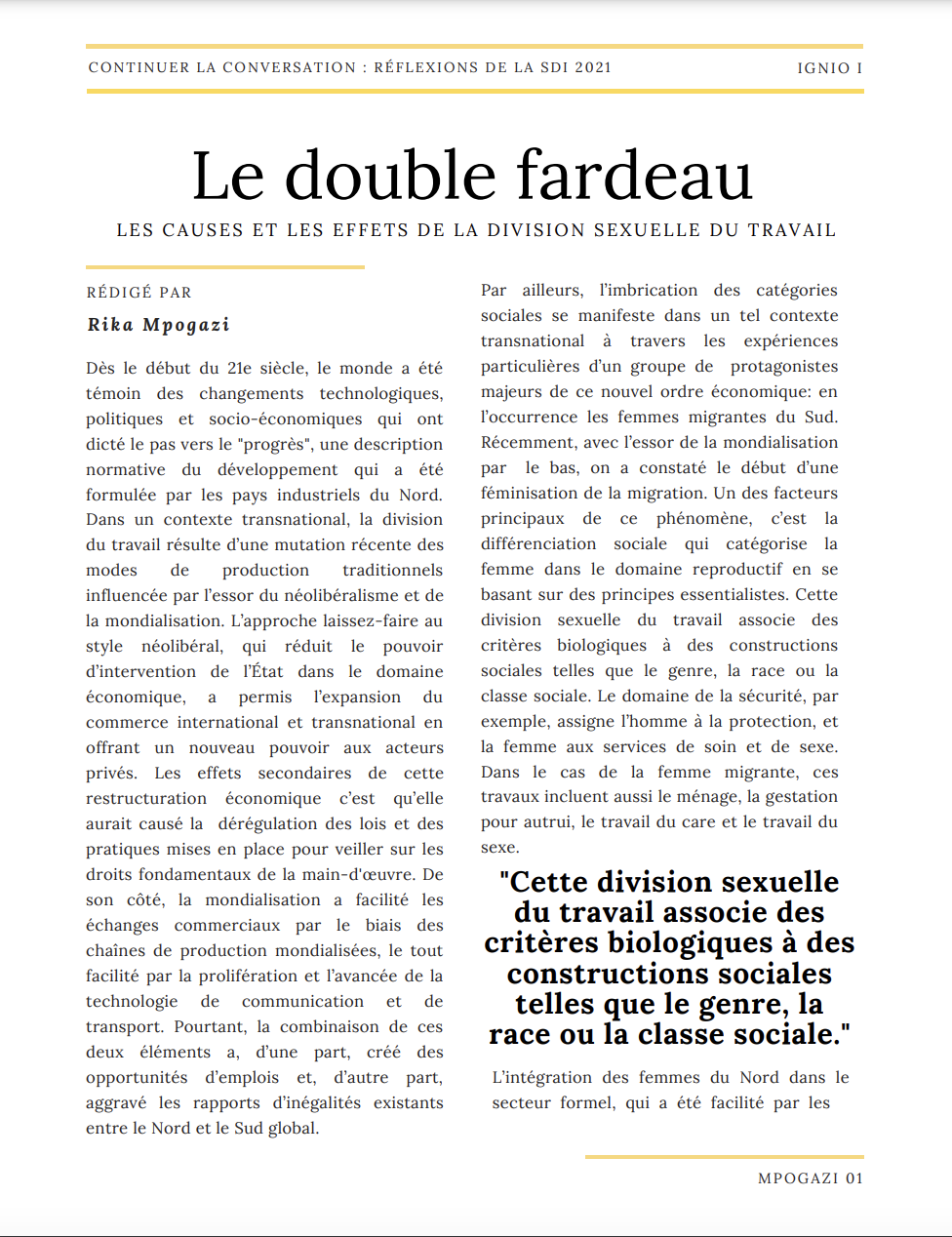
Le double fardeau: Les causes et les effets de la division sexuelle du travail
D’un côté, la mondialisation a facilité l’expansion du commerce international. De l’autre, cette division du travail mondialisée représente la source de l’inégalités mondiales. Cet article explique comment ces inégalités auraient déclenché des tendances migratoires qui illustrent le double fardeau, productif et reproductif, qui pèse sur les femmes du Sud global lorsqu’elles migrent vers le Nord.
-
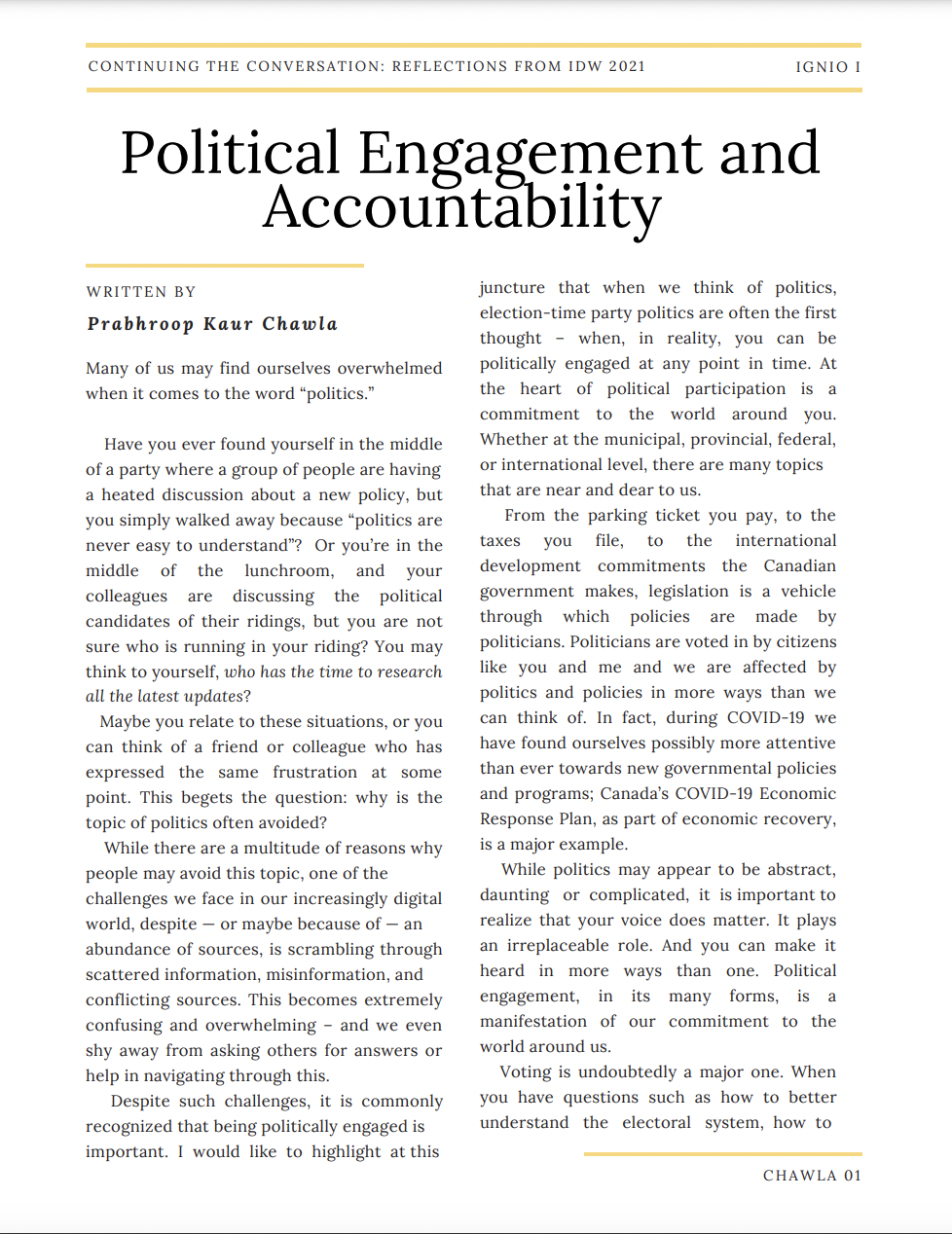
Political Engagement and Accountability
This article is meant to highlight the importance of political participation, and how it can be applied in all aspects of our lives. As an International Development student, I noticed that there were some gaps in addressing the relationship between topics of development and topics of political science, besides a couple overlapping introductory political philosophy classes. Though this post discusses political participation generally, the following are some questions to consider in the context of international development to further discussion on this topic: what role does political engagement play in relation to international development-related policies in Canada? What are some challenges/areas to be worked on?
-
Consumption Driven Externalization of Land Demand and Outsourcing Land Degradation
The environmental and socio-economic long-term impacts of trade, such as land use patterns, deforestation, and natural resource degradation, remain complex and controversial. For example, unprecedented land-use changes are exacerbated by the constant development of economies and expansion of global markets resulting in resource depletion and ecosystem degradation. This essay describes how in most cases, decisions on local land use are largely influenced by economic globalization, which increases the impact of large agribusiness enterprises and international financial flows at the local level.
-
Indigenization as Decolonization
Decolonization requires us to introduce structural changes that disrupt the status quo. This article seeks to identify the issues with the surface-level assimilation of Indigenous peoples, and knowledge or teaching practices into our academic spaces, in order to ethically reconstruct our academic discourse.
-
In Fear of Intervention
The international community has long been divided on when, where and how to intervene in the Israeli–Palestinian peace process. This article will break down the historical trajectory of foreign intervention in this disputed region and elaborate on how countries like Canada, the United States and the United Kingdom’ actions, or the lack thereof, have aggravated existing tensions between the Israeli state and the Palestinian people.
-
Women’s Voices in Environmental Spaces: A Manufactured Narrative
This piece discusses how history has shaped the Global North’s perceptions of women within environmental movements and what is deemed an acceptable environmentalist by Western society. It also explores some of the challenges faced by racialized women within environmental spaces today.
-
Globalization and Indigenous Food Security
Is Indigenous food security and a return to traditional food systems possible within capitalism and globalisation? This paper explores how capitalism is intrinsically opposed to Indigenous traditional values and cannot coexist alongside each other in order to support Indigenous food security and sovereignty.
Creative Connexion
-
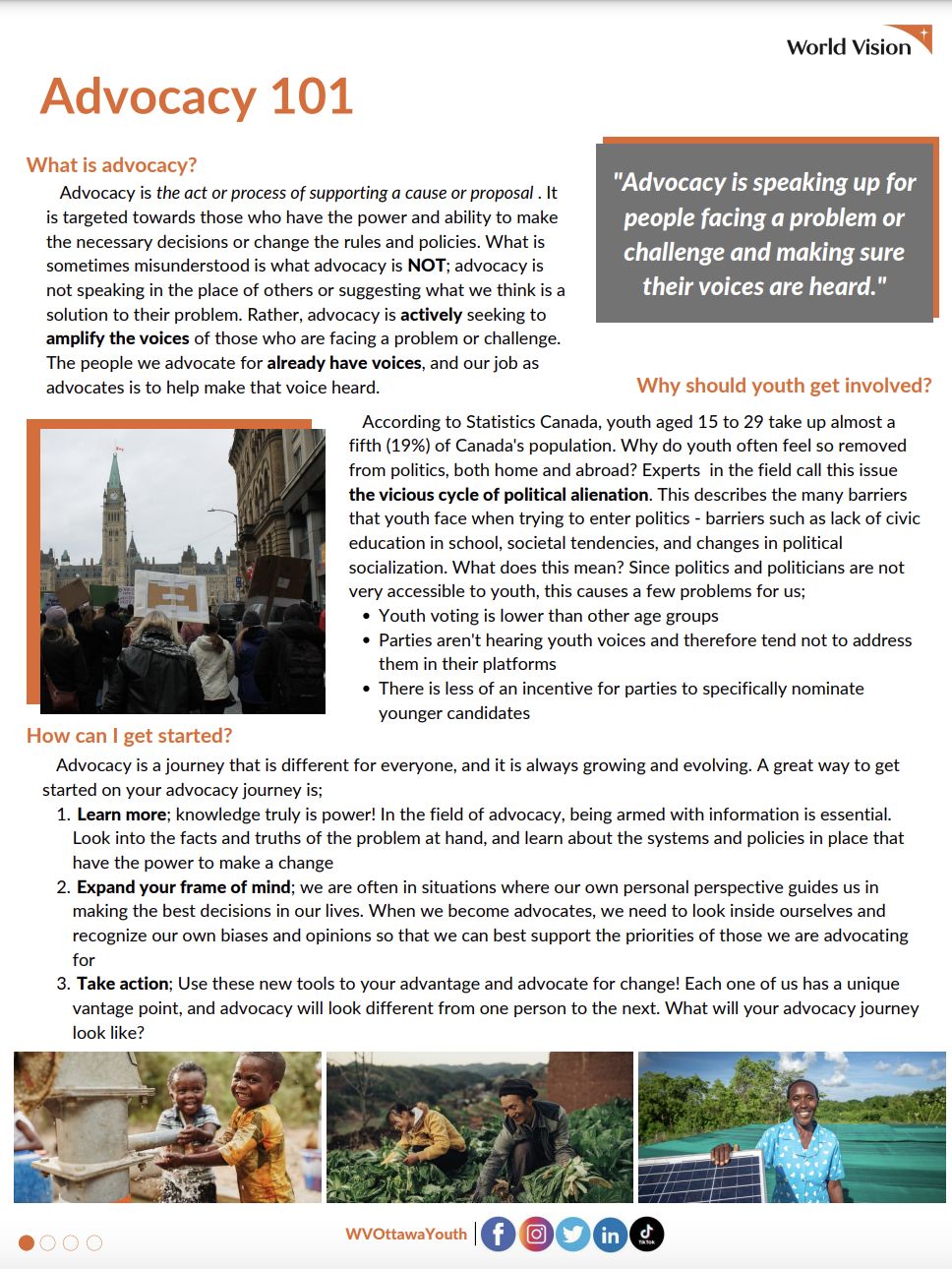
Advocacy 101: A Guide
Advocacy 101: A Guide, explores foundational themes that exist in the world of advocacy. Such themes include how to get started as an advocate, exploring “voluntourism”, humanitarian and development aid, unconscious biases, “white saviourism”, and more!
-

PODCAST: IntersectionaliTEA x IDW (EN)
Episode 1: COVID-19 and Displacement – In this special three part series for International Development Week (IDW) 2021, Karina and Huwayda take listeners through the journey of the refugee during the pandemic. This episode focuses on the broader impacts of the COVID-19 pandemic on refugees.
Episode 2: Seeking Refuge in a Pandemic – In episode two of IntersectionaliTEA’s collaboration with IDW 2021, Karina and Huwayda discuss topics related to ethics, equity and emergency response while refugees are fleeing during the pandemic.
Episode 3: COVID Impacts on Refugees in Host Countries – In episode three of IntersectionaliTEA’s collaboration with IDW 2021, Karina and Huwayda examine the pandemic-related public health response by host countries towards refugees.
-
PODCAST: IntersectionaliTEA x SDI (FR)
Épisode 1: COVID-19 et déplacement – Dans cette série en trois parties en collaboration avec la Semaine de développement international (SDI) 2021, Karina et Huwayda vous ferons découvrir le parcours du réfugié pendant la COVID-19. Cet épisode se concentre sur les impacts plus larges de la pandémie sur les réfugiés.
Épisode 2: À la recherche d’un refuge dans une pandémie – Dans le deuxième épisode de la collaboration de l’IntersectionaliTEA avec la SDI 2021, Karina et Huwayda discutent de sujets liés à l’éthique, l’équité et les interventions d’urgences pendant que les réfugiés fuient durant la pandémie.
Épisode 3: L’impact du COVID sur les réfugiés dans les pays d’accueil – Dans le troisième épisode de la collaboration de l’IntersectionaliTEA avec la SDI 2021, Karina et Huwayda examinent la réponse de santé publique liée à la pandémie des pays d’accueil envers les réfugiés.
-
Uprooted Retribution and Barren Earth, Pregnant Mother
Jocelyn’s work depicts how Mother Earth would react to the arrogance and cruelty of human greed. It incorporates themes of extraction and exploitation, with the first painting depicting Mother Earth angrily grieving over uprooted trees. The second piece imagines a celestial, divine Mother Earth who plans to rebirth the entire planet. This series aims to critique humanity’s extractive industries and our contribution to climate change, with an emphasis on clear cutting.
-
Resistance from Food, The Elves of the Shallow Sea, and Consequence
Oliver’s series consists of three paintings, Resistance from Food, The Elves of the Shallow Sea, and Consequence. All three pieces examine the interactions between climate change and animals, taking inspiration from current events, including overfishing and irresponsible disposal of waste.
-
In The Garden, Burning Flowers
In The Garden Burning Flowers is a book-based photo project that thinks about vulnerability, hope, animals, mortality, and the fragility of truth. Made after dark among the woods and rivers of Ontario and Quebec, the work consists of black and white photographs rendered in a flash-documentary style, driven by an interest in the sensation of the familiar crossing into the strange, Peter’s work considers how photography personifies the non-human and symbolizes those he is closest to. The series explores how our human presence is at once estranged and benevolent, adrift in our need of again learning to coexist.
-
Finding Africa: An Explanation by ASHA Students
In the past, scholars have conceptualized development as a process predicated on economic growth and conformity to Western institutions. This creative submission seeks to articulate African development through a different lens – one that helps the audience find Africa among misinformed, misinterpreted, and primarily Western rhetoric.
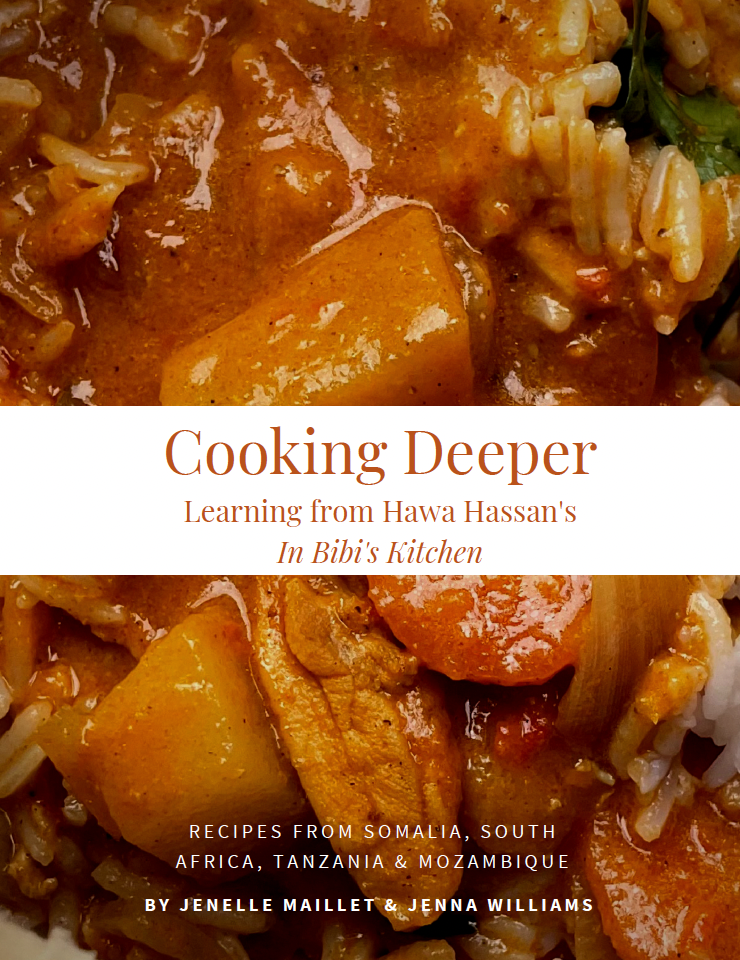
Supplementary Works
-
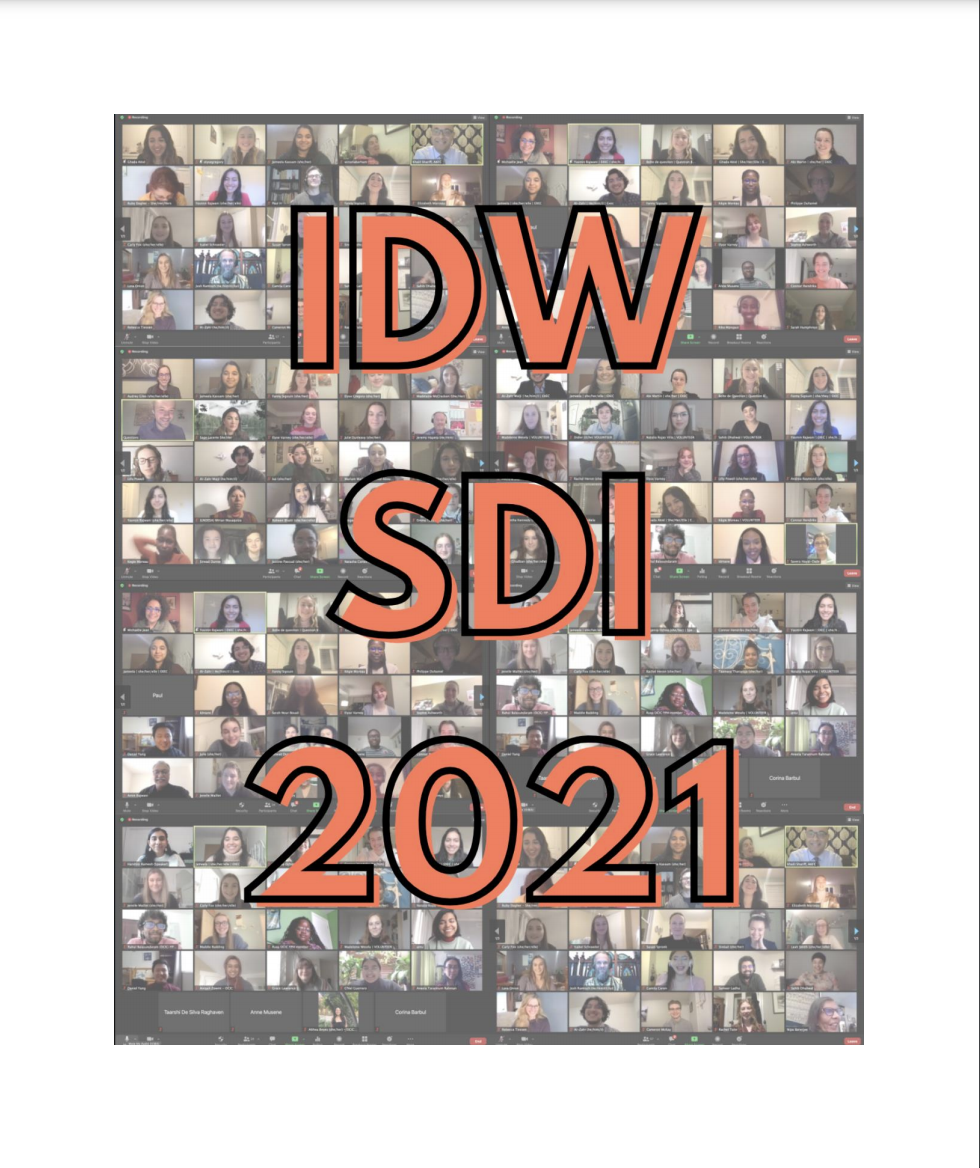
IDW 2021 Final Report
In this post-conference report, delegates and the community have the opportunity to review, engage with, and continue the conversations that took place at IDW 2021. The report highlights the conference’s key events and speakers, provides notes from panel discussions, and outlines future opportunities.
-
Globalization and Indigenous Food Security
Is Indigenous food security and a return to traditional food systems possible within capitalism and globalisation? This paper explores how capitalism is intrinsically opposed to Indigenous traditional values and cannot coexist alongside each other in order to support Indigenous food security and sovereignty.